
Basic French Travel Phrases for Getting Around and Asking Directions
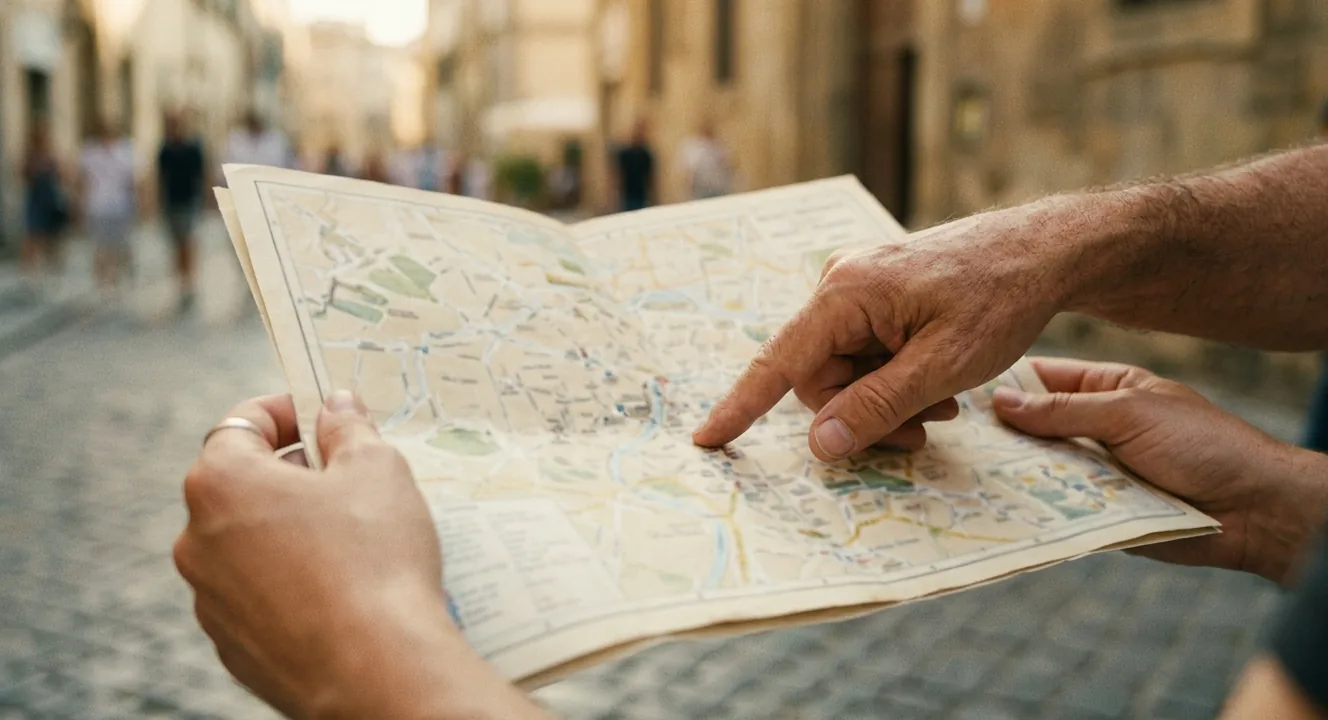
Getting around a French city comes down to a handful of questions you ask a stranger who is already on their way somewhere. Where the station is, whether you can walk it, what a ticket costs, which platform, what to say when you are lost. These ten phrases cover those moments, in the order a trip needs them.
They are short on purpose, because a short question gets a short answer you can act on. They come from our Getting Around flashcard deck, and each one includes the moment to use it and the mistake English speakers actually make.
1. Comment je fais pour aller à la gare ?
How do I get to the train station?
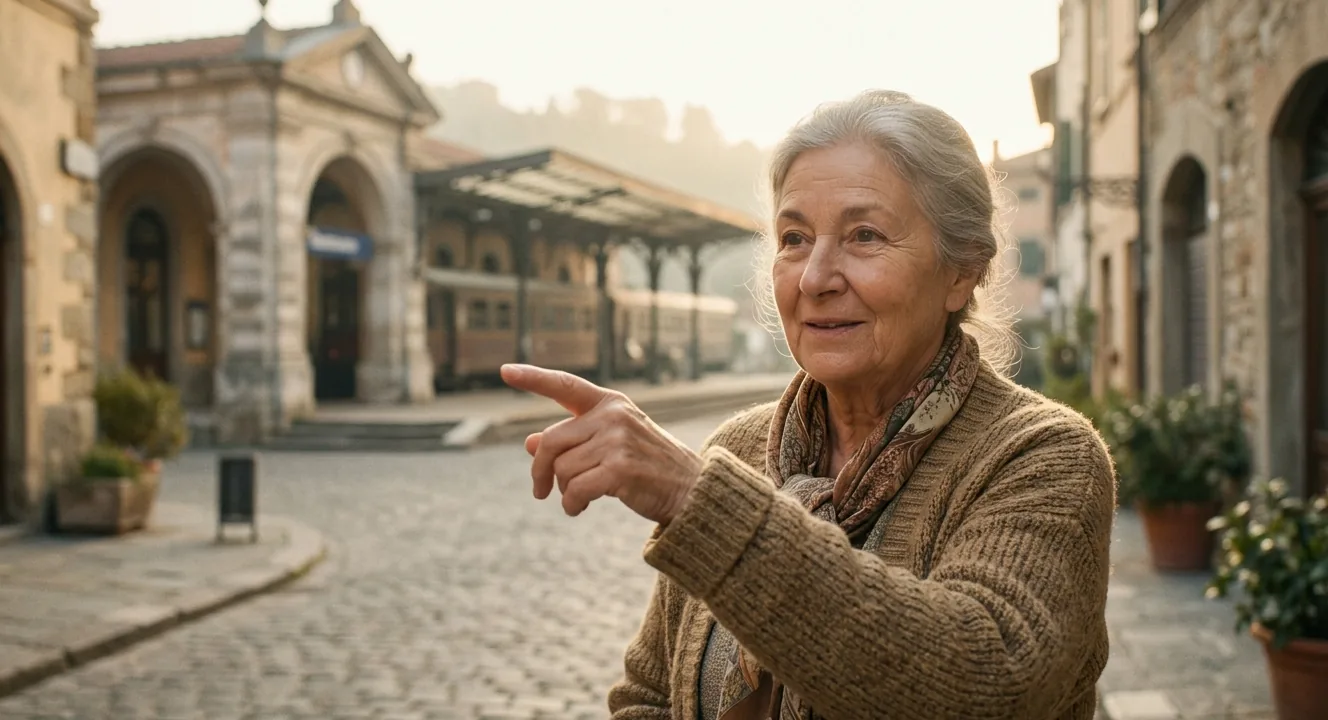
The question that starts most journeys, and the one for when you are near a station you cannot see. You come up from the metro in an unfamiliar neighbourhood with a train to catch: stop someone at the corner and ask, Comment je fais pour aller à la gare ?
Watch out: The word English speakers drop is pour. In English you go straight from "get" to "to", so "Comment je fais aller à la gare" comes out and arrives as half a sentence. Keep pour in the middle and the rest holds together.

2. On peut y aller à pied ?
Is it walking distance?
For the moment right after someone tells you where a place is and you need to know whether to walk or wait for a bus. You are at a stop weighing a twenty-minute wait against a walk of unknown length: On peut y aller à pied ?
Watch out: English says "by foot", so par pied comes out, but French only ever uses à pied. There is also no French noun for "walking distance", so do not try to build the question around one: ask whether you can go there on foot.

3. Allez tout droit
Go straight
One of the few phrases here you will hear far more often than you say. Someone answers your question with a hand pointing down the street and Allez tout droit: keep walking, do not turn, the place is ahead of you.
Watch out: Droit is straight and droite is right. They are one letter apart and they are the two answers you are most likely to get, so the direction of your next ten minutes rests on hearing the difference. Tout droit means carry on, and à droite means turn.

4. Où est l'arrêt de bus ?
Where is the bus stop?
For finding the actual pole with the timetable on it, which is often a street or two from where your map puts it. You are in a small town with one bus an hour and no shelter in sight: Où est l’arrêt de bus ?
Watch out: English uses "stop" and "station" loosely and French does not. A bus has an arrêt, the metro has a station, and trains have a gare, so asking for la station de bus gets you a puzzled look, or worse, clear directions to the wrong kind of place.

5. Combien coûte un billet ?
How much is a ticket?
For a ticket window, or a machine that is showing you everything except a price. You are at the counter with a queue behind you and no idea what a single fare should cost: Combien coûte un billet ?
Watch out: "How" translates to comment, so comment coûte is what comes out under pressure at a counter. The word for "how much" is combien, and it is the one that gets you a number back.
6. Où est l'entrée du métro ?
Where is the metro entrance?
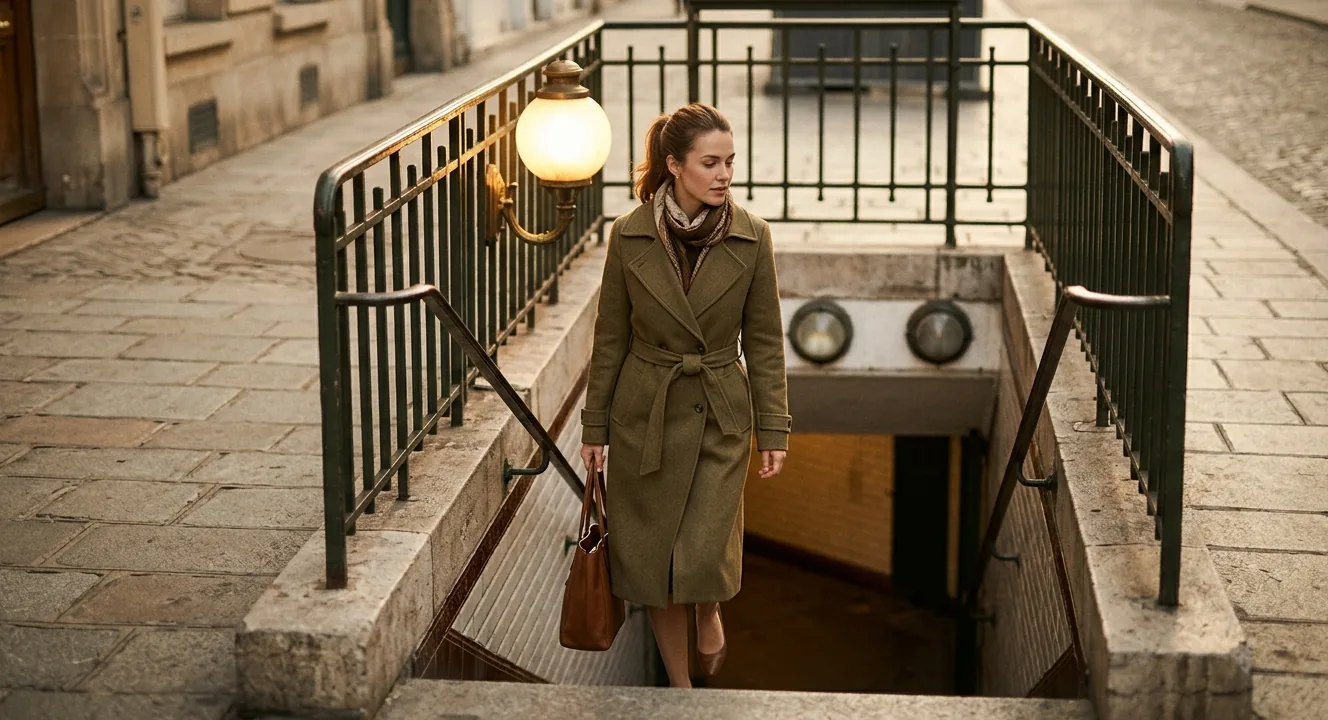
Metro entrances hide in plain sight: a staircase set into a building, a sign the size of a book. You can be standing directly on top of a station and still not find the way down, which is when you ask someone who uses it every day.
Watch out: Entrée and sortie sit on nearly identical signs, and asking for the sortie sends you to an exit where the gates do not open in your direction. Word order matters too: French puts the thing first, l’entrée du métro, not le métro entrée.

7. Quel quai ?
Which platform?
Two words, said fast, for the ninety seconds before a train leaves. The board lists your train but no platform, or the platform changed while you were buying coffee: hold up your ticket to anyone in uniform and say Quel quai ?
Watch out: "Platform" looks like it should be plateforme, and that is the word almost everyone reaches for first. A railway platform is a quai. Plateforme exists in French, but it means a raised structure, not the place you stand to board a train.

8. Je suis perdu
I'm lost
The sentence that turns a stranger into a helper faster than any question you could ask. You have walked the same block three times and your phone is at four percent: say Je suis perdu to the person behind the nearest counter and show them where you are trying to go.
Watch out: Je suis perdu is "I am lost". J’ai perdu is "I have lost", which sends the conversation somewhere else entirely, and you spend the next minute describing a wallet you never lost.

9. J'ai besoin d'un taxi
I need a taxi
For late trains, heavy bags, and the hour after the metro stops running. You come out of a station at eleven at night with no taxi rank in sight: say it at the nearest hotel desk or bar, J’ai besoin d’un taxi.
Watch out: In English "need" is a single verb, so people say je besoin and stop, which lands as a sentence with a hole in it. French says it as "I have need of", so the j’ai is doing the work and cannot be left out.
10. Où est la pharmacie la plus proche ?
Where is the nearest pharmacy?
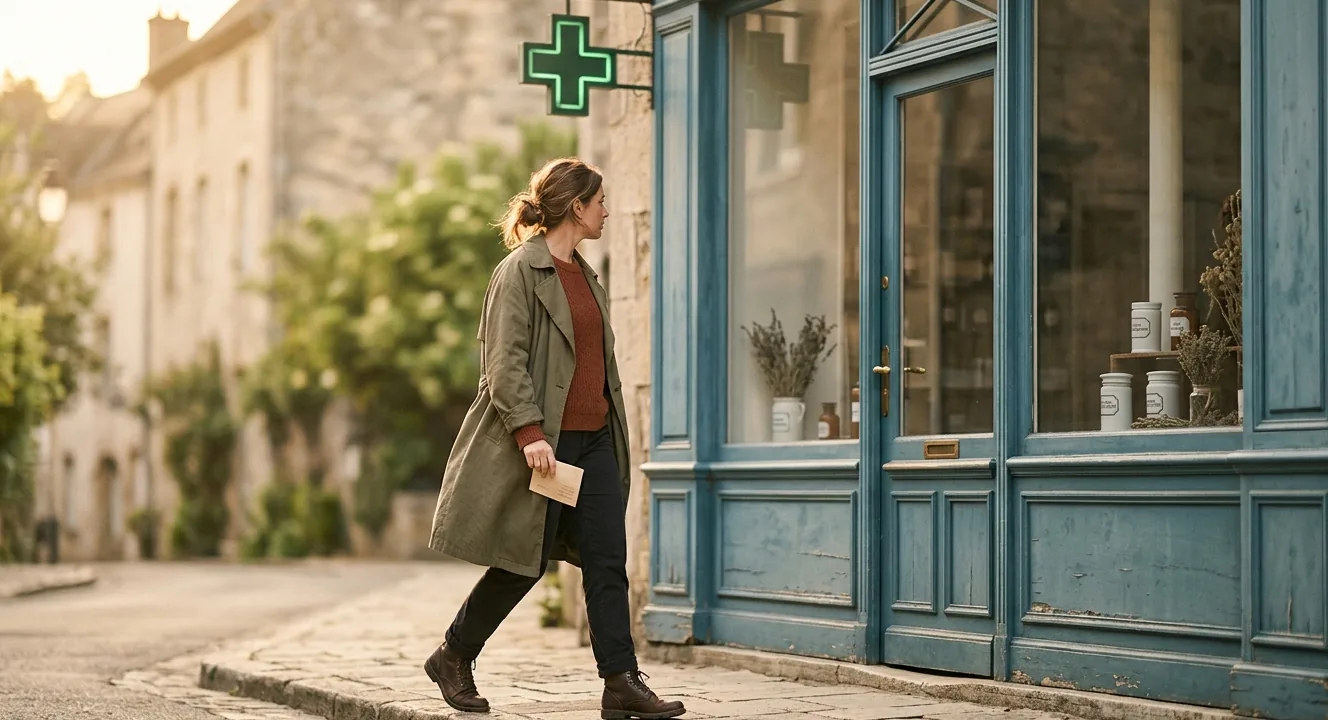
In France the pharmacy is the first stop for anything small: a headache, a blister, a stomach that has turned against you. Look for the green cross above the door, and when you cannot see one from where you are standing, ask: Où est la pharmacie la plus proche ?
Watch out: "Nearest" is la plus proche. Très proche only means "very close", which is a softer question and gets you a vaguer answer, when what you want is the one you can reach on foot right now.