
Spanish Survival Phrases You Should Memorize Before Your Next Trip
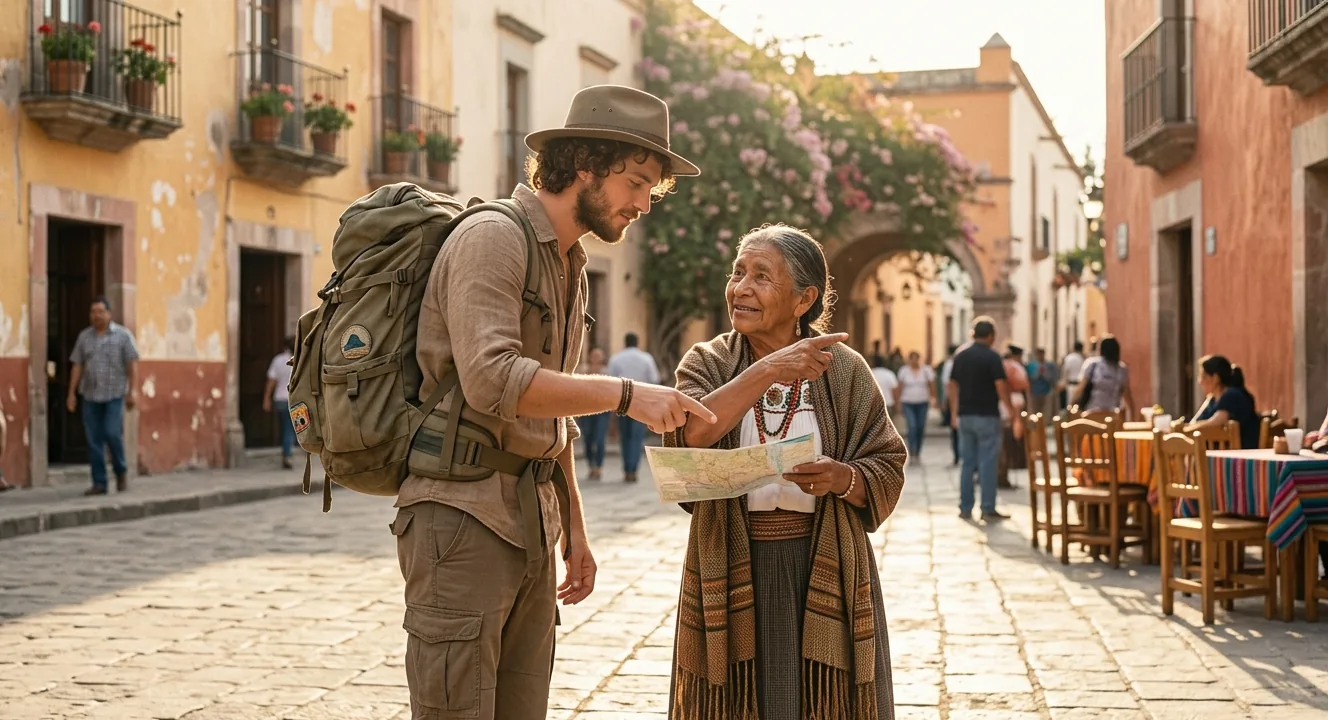
You don't need conversational Spanish to travel well. You need a small set of phrases you can say without thinking, at the moment they're needed. They cover food, directions, money, and emergencies, and they buy you goodwill for everything else.
These ten are the core of our Survival Spanish flashcard deck. Each one comes with the moment to use it and the mistake English speakers actually make.

1. ¿Dónde está el baño?
Where is the bathroom?
The most-used phrase of any trip, in restaurants, stores, stations, and museums. You've ordered at a café and need the restroom: catch the waiter's eye with "Disculpe, ¿dónde está el baño?"
Watch out: Use está, never es. "¿Dónde es el baño?" is the classic ser/estar slip, and locals hear it instantly.

2. ¿Cuánto cuesta?
How much is it?
For markets, taxis without meters, and anywhere prices aren't posted. Hold up the souvenir, point, and ask. Prices firm up fast for tourists who don't.
Watch out: For several items it's "¿Cuánto cuestan?": the verb goes plural with the things you're buying.

3. ¿Habla inglés?
Do you speak English?
Opens any interaction you can't finish in Spanish, and asked politely it earns patience even when the answer is no. At a pharmacy counter with a specific need, lead with it, then point, translate, or mime.
Watch out: This is the formal usted form, right for strangers. "¿Hablas inglés?" is for people your own age at the hostel bar.

4. No entiendo
I don't understand
The honest reset button: stop, rephrase, slow down, zero grammar required. When a local answers with rapid-fire directions, "Lo siento, no entiendo" resets things to gestures and landmarks.
Watch out: It's not the same as "No hablo español." "No entiendo" invites another try; "no hablo español" ends the conversation.

5. ¿Puede hablar más despacio, por favor?
Can you speak more slowly, please?
The follow-up that actually rescues you, because most replies fail on speed, not vocabulary. You asked for directions and caught nothing: this phrase plus "¿puede repetir?" recovers the conversation.
Watch out: Despacio means slowly. Reach for the wrong adverb and you've asked for "más rápido", which means faster.

6. ¿Me puede ayudar, por favor?
Can you help me, please?
General-purpose help: you're lost, the ticket machine won't cooperate, you're on the wrong platform. When the metro machine rejects your card and the line is growing, turn to the person behind you with this.
Watch out: Keep the me in front. Drop it and "¿Puede ayudar?" floats vaguely; flip it wrong and you've offered to help them.
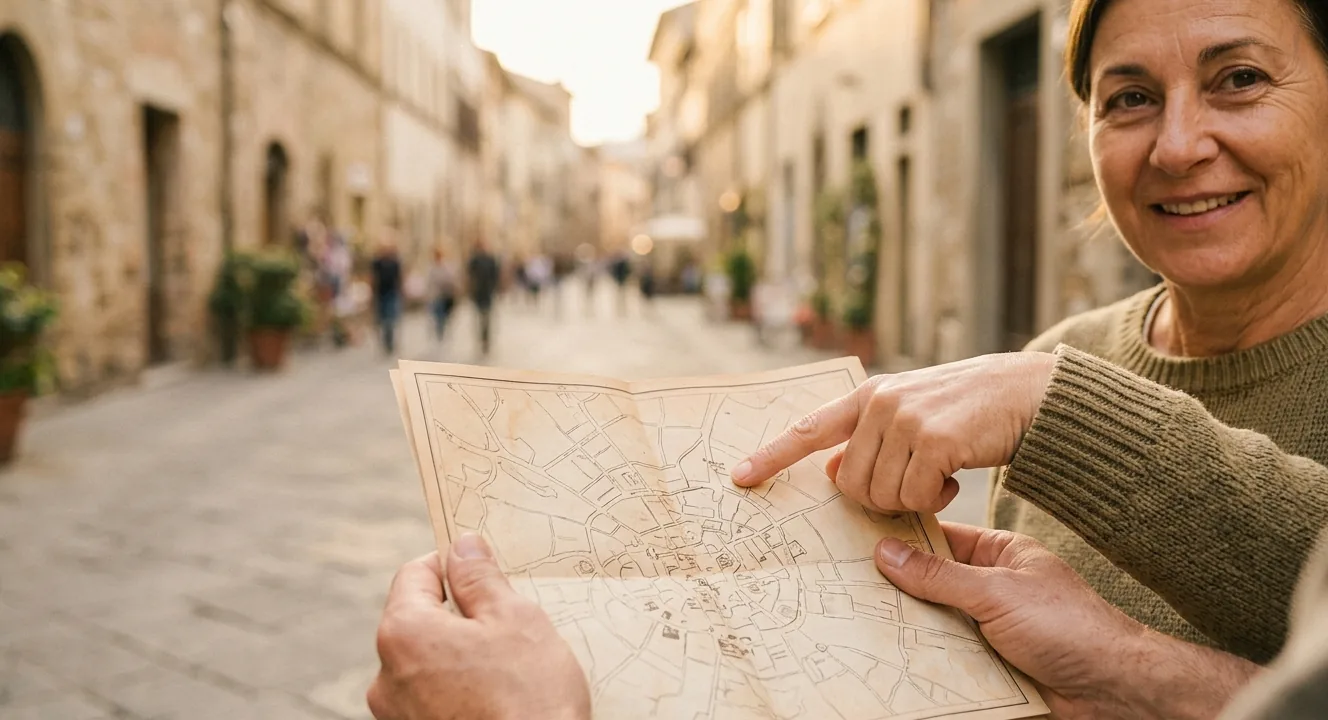
7. ¿Cómo llego a...?
How do I get to...?
Fill the blank with anything: al aeropuerto, al centro, a la estación. Ask it at the bus stop, then follow the pointing hand, not the words.
Watch out: Expect the answer to come back fast. Pair it with the slow-down phrase, or ask them to point on your phone map.

8. ¿Puedo pagar con tarjeta?
Can I pay by card?
Ask before ordering at small places; cash-only spots are still common outside tourist centers. No card stickers on the restaurant door? Ask as you sit down, not when the bill arrives.
Watch out: Tarjeta is card. "Con carta" means with a letter, and yes, people say it.

9. Necesito un doctor
I need a doctor
For emergencies, and at a pharmacy counter when you need pointing to the nearest clinic. Food poisoning at the hotel: the front desk plus this phrase gets you a clinic recommendation or a phone call.
Watch out: Don't overthink the grammar in the moment. "Necesito un doctor" said badly beats a perfect sentence you can't produce.

10. Tengo alergia a...
I'm allergic to...
Non-negotiable with a food allergy: a los frutos secos (nuts), al marisco (shellfish), al gluten. "Tengo alergia a los cacahuetes" to the waiter flags the kitchen, and pronunciation matters far less than saying it at all.
Watch out: Say it before you order, not when the plate lands. Keep a screenshot of your allergy written in Spanish as backup.